
How Józef Pankiewicz revolutionized Polish painting?
Józef Pankiewicz's long life (1866-1940) coincided with a period of the most revolutionary changes in European art. His painting smoothly transitioned through stylistic changes: from realism and naturalism, through impressionism, symbolism, and post-impressionism, briefly touching upon cubism and fauvism, before finally providing the best examples of colorism. Thanks to his stays in Paris, Pankiewicz encountered new trends in Western painting and attempted to transfer those experiences to the Polish scene. He revolutionized Polish art by introducing the concept of conscious and pure painting, gathering around him a large group of students fascinated by modern French art and the myth of Paris.
Pankiewicz's first encounter with the art of French modernists occurred in 1889 when he traveled to Paris along with his friend Władysław Podkowiński. The trip was financed by Ignacy Korwin-Milewski's purchase of Pankiewicz's composition Market by the Iron Gate. In the capital of France, Polish painters discovered the works of Claude Monet and familiarized themselves with the assumptions of impressionism. This direction advocated for "pure vision," perceiving only the impressions of color and light. Impressionists captured transient arrangements of colors in nature, which changed depending on the time of day, season, and lighting. Although Pankiewicz adhered to the principles of this movement only until the middle of 1891, this experience influenced his thinking about the chromatic construction of the image throughout his later artistic career. Upon returning to Poland in 1890 along with Podkowiński, he began to promote the principles of impressionist luminism, which, however, did not take hold in Polish art.
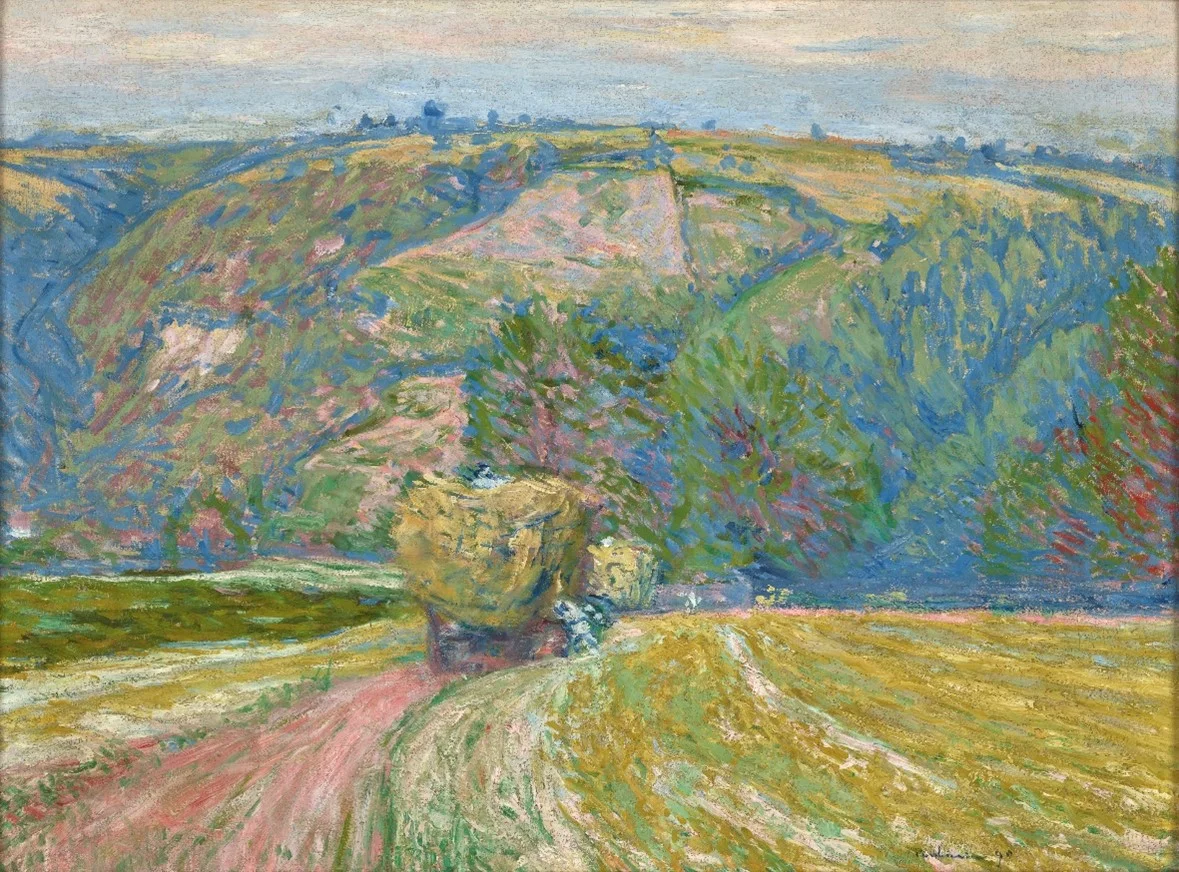
Soon, Pankiewicz abandoned the sunny light of the impressionists and, from 1892 to 1897, turned to symbolism, also familiarized in Paris through the works of Gauguin, Bonnard, or Vuillard. During this time, he created urban nocturnes, suburban landscapes, and Polish landscapes saturated with a melancholic mood, in which he mastered the distribution of light, blurring of contours, cool color tonality, and differentiation of textures.
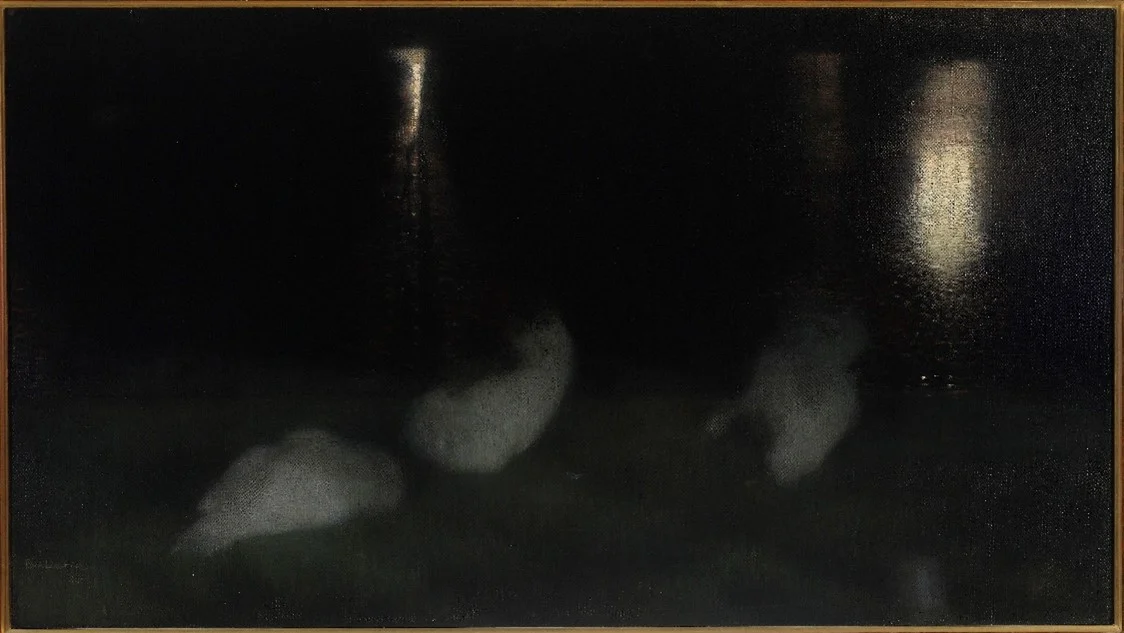
In 1897, Pankiewicz joined the Krakow Society of Polish Artists "Sztuka," with which he regularly exhibited both in Poland and abroad. From 1897 to 1903, he eagerly traveled around Europe to thoroughly study the works of the old masters. In Italy, he admired the color and light in the paintings of Titian, Veronese, and Tintoretto, while in the Netherlands and Belgium, he familiarized himself with the works of Flemish primitives and seventeenth-century Dutch masters, with Rembrandt and Vermeer at the forefront. At the same time, he began to acquaint himself with printmaking, which he later mastered. In 1900, he was awarded a silver medal for the painting "Portrait of Mrs. Oderfeld with Daughter" (1897) at the Universal Exhibition in Paris. At the beginning of the 20th century, he presented his works at numerous exhibitions: at the Galerie Georges Petit in Paris (1900), at the Autumn Salon (1904, 1907, 1909, 1919), and at the Independents (1911, 1912). In 1906, he was appointed a professor at the Krakow Academy of Fine Arts. From that moment on, he stayed in Krakow during the academic year, while during vacations, he traveled to Paris, Normandy, and the Mediterranean coast.
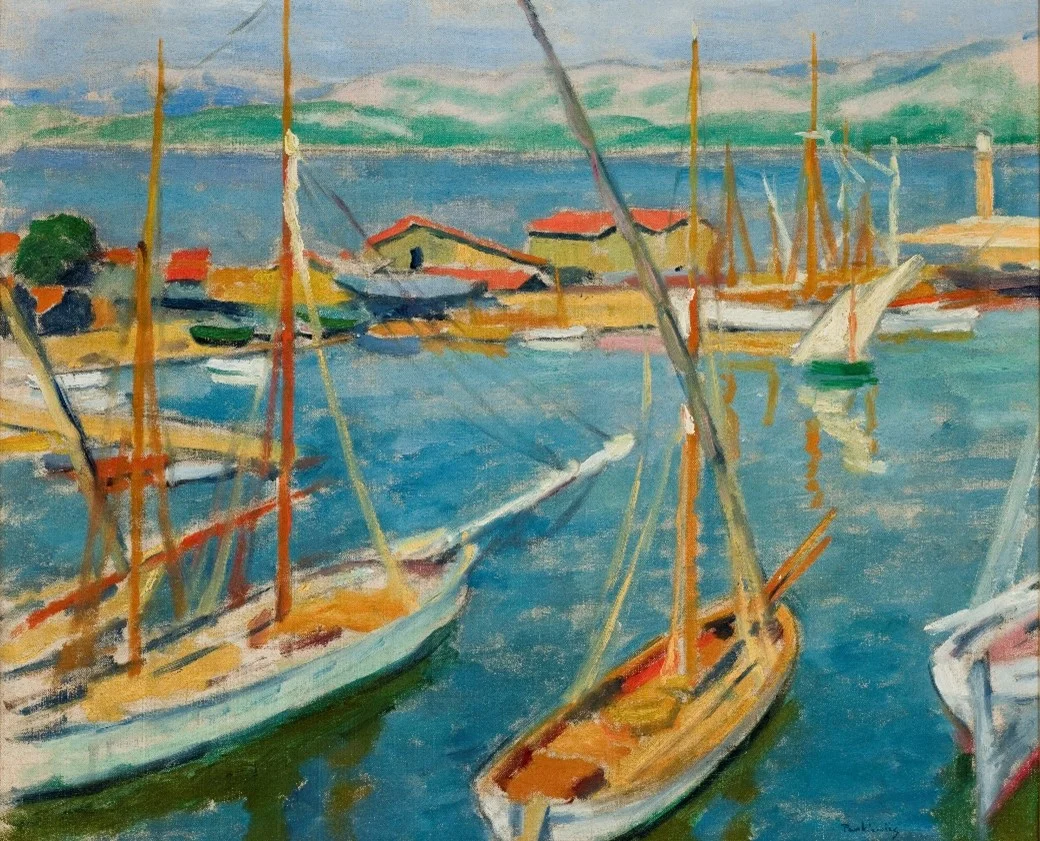
From 1903 to 1914, Pankiewicz's artistic concept developed, which was to prevail until the end of the 1920s. It is characterized by a return to color issues and a desire to create new principles for building forms with color. The art of Paul Cézanne, Auguste Renoir, and his close acquaintance with Pierre Bonnard influenced the artist. He was, however, skeptical of more avant-garde concepts of painting formation that dynamically emerged at the turn of the 20th century: fauvism, German expressionism from the "Die Brücke" and "Der Blaue Reiter" circles, cubism, futurism, or abstraction. Pankiewicz sought harmony in painting above all; he feared that avant-garde trends would fracture the integrity of the image's elements and the perception of nature. Nevertheless, in the difficult times of war, far from his friends in Paris and Krakow, the Polish artist decided to reconcile with fauvism and cubism. Perhaps this was influenced by the new acquaintance of the painter with the non-orthodox cubist, Robert Delaunay or the fascination with the "African sun of Spain."
The outbreak of World War I found Pankiewicz and his wife Wanda (née Lublińska) in Collioure in the Pyrenees on the Spanish border. A temporary study trip turned into a long-term emigration. In the small French town, every foreigner was suspected of espionage. No one knew Pankiewicz there, and his Austrian citizenship as well as the age of the painter did not make the situation easier. The couple was advised to leave for Spain as soon as possible. They first went to Barcelona and then, after a few weeks, settled for the next five years in Madrid.
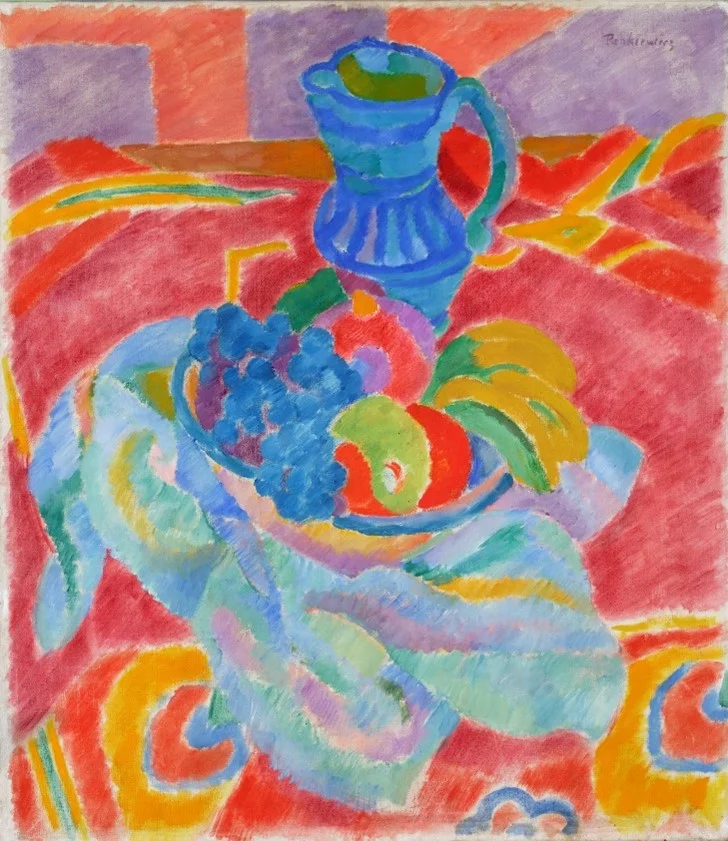
The Spanish period lasted only five years, although it brought entirely new, bolder experiments with form, exploring intensively the experiences of the two most important trends at the turn of the 20th century: fauvism and cubism. Fauvists, like impressionists and post-impressionists, treated color as the fundamental building component of the picture, but unlike their predecessors, they did not derive color from color-light impressions as implied from "pure vision" of nature. Spots and color planes were only a loose allusion to nature, yet they played a crucial role in constructing the image and defining the motif. They not only indicated the color of the depicted object but also conveyed its shape, as well as the luminous space and depth. Cubists, on the other hand, positioned themselves at the other extreme of spectrum when it comes the essence of painting. The building material of their compositions was not color but forms, first determined by valor, and then by plane, and their spatial relationships. They depicted objects not as they saw them but as they were.
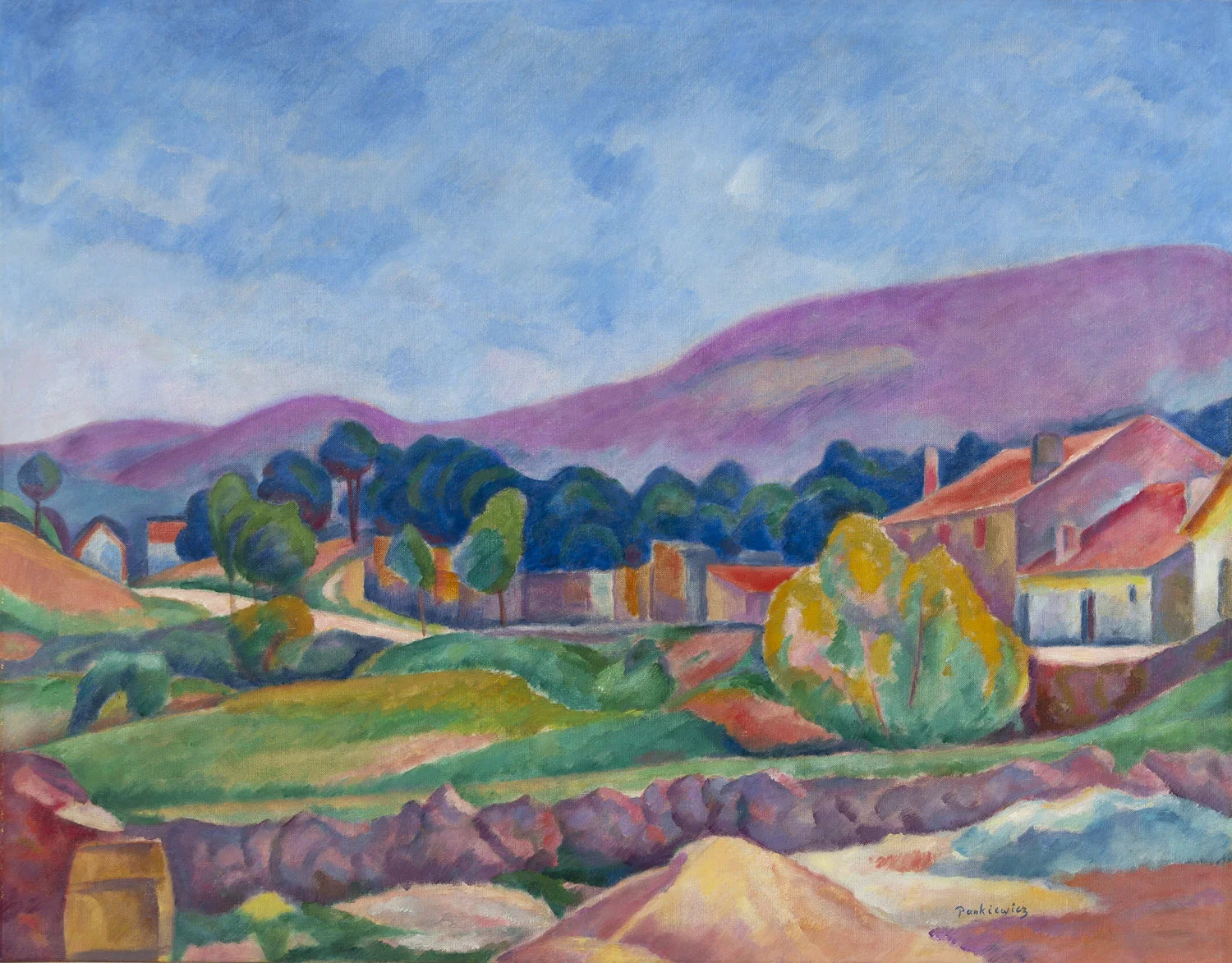
Pankiewicz's Spanish period works consist of still lifes as well as mountain and urban landscapes with intense, pure hues in the form of flat color spots. They exude exceptional vitality and radiant weather. The Madrid buildings, terraces, and vegetation scorched by the southern sun, as well as the mountain landscapes, take on extraordinary shades: they are maintained in sharp yellows, greens, and ochres contrasted with blue-violet shades of the sky. One can definitely see a greater inclination towards fauvism than cubism in these works, although certain geometric simplifications reminiscent of the earliest phase of cubism are noticeable. However, it is color that constitutes the main building block of these paintings, constructing form, light, and the space of the composition according to the principles of fauvism. The forms, although geometrically simplified, remain consistent with the commonly perceived appearance of objects and are subordinated to the plane, creating a clearly palpable depth. After the war, in 1919, the Pankiewicz returned to Paris, and Józef moved away from flat spots of pure colors. However, the strong colors from the Spanish period still resonated in his work for several years, contributing to the creation of the most beautiful paintings of the 1920s.
Due to the difficulties with returning to Poland, the Pankiewicz family initially lived periodically, and then permanently, in Paris. However, the painter did not forget about the Krakow academy. With the help of Feliks Jasieński, he asked the Galician Governorate in Lviv to organize the Polish Institute of Fine Arts in Paris, which would allow Polish artists to familiarize themselves with Western art, especially French. This plan was partially realized several years later. Before that happened, Pankiewicz returned to Poland for a while.
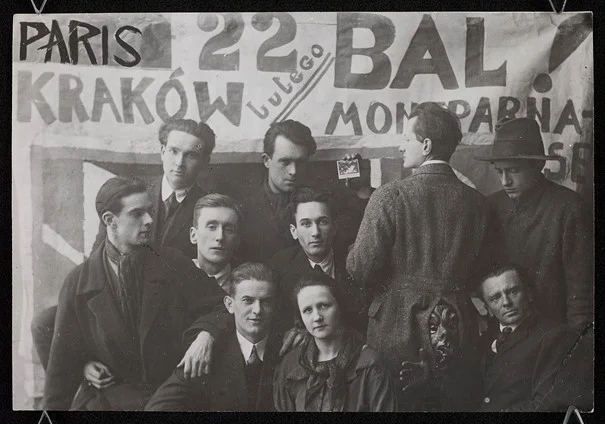
In March 1923, he again taught painting and printmaking at the Krakow Academy of Fine Arts. His courses aroused considerable interest among students who were immensely interested in art and artistic life in France. The young art enthusiasts were determined enough to go to Paris and encounter modern French art, so they formed the "Paris Committee" to raise funds for the trip. The plan succeeded, and in the fall of 1924, eleven students along with the professor went to Paris. Among them were Jan Cybis, Józef Czapski, Seweryn Boraczok, Artur Nacht-Samborski, Tadeusz Piotr Potworowski, Hanna Rudzka (later Cybisowa), Janina Przecławska, Janusz Strzałecki, Marian Szczyrbuła, Zygmunt Waliszewski, and Józef Jarema. In the following year, with the financial support of Stefan Laurysiewicz and several of his friends, the Paris Branch of the Academy of Fine Arts in Krakow was established, and Józef Pankiewicz became its director. He held this position until the end of the academic year 1936/37. Besides studio classes, the program of the branch included making copies of the greatest works of European painting once a year, visiting museums, collections, and exhibitions, as well as Sunday lectures on art history at the Louvre. Thanks to his knowledge, Pankiewicz also provided students with active contact with the local artistic community. The stay of the Kapists in Paris, initially planned for a few months, lasted for many years. After obtaining their diplomas at the Paris branch in 1930-1931, most of them returned to Poland and engaged in popularizing colorism in the country.
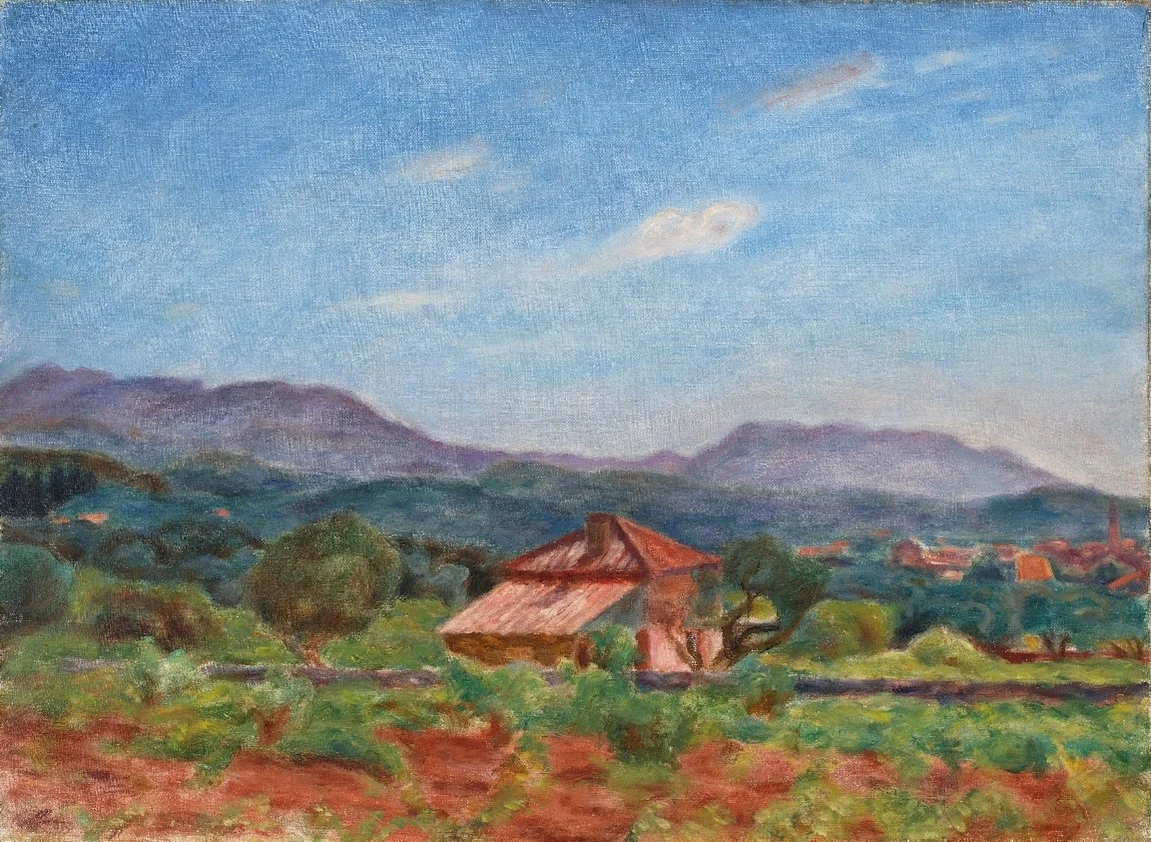
In the later period of his career, Pankiewicz gradually abandoned pure, intense, and decorative color in favor of value painting, which was an objective vision of reality. From the 1930s, he created less and less. The frequent subject of the painter's post-war works is "landscapes with fluffy tree crowns" around Sanary, Cassis, and La Ciôtat. From 1928 to 1931, he also created decorative panels for the Royal Chapel at Wawel. The artist died in his beloved France, in La Ciôtat in 1940.
Józef Pankiewicz was one of the figures who shaped Polish painting most significantly at the turn of the 20th century. Not only because, as one of the first, he introduced new, modernist trends in art such as impressionism or symbolism to Polish soil, but above all because he presented the concept of conscious and pure painting to Polish art, as exemplified by his distinguished works. As an educator, he shaped the artistic attitude of an entire generation of Polish painters and printmakers, who contributed to maintaining the long tradition of colorism in Polish painting that continues to this day.